Seriously, you’ll wish you had one of these as a child. These ideas are magical, creative, and way more achievable than you think.
Disclosure: This post may contain affiliate links. As an Amazon Associate, The Home Flare earns from qualifying purchases.
Why Mud Kitchens Are Having Such a Moment Right Now
There’s something deeply satisfying about watching a child dig their hands into soil, scoop muddy water into an old pot, and declare with absolute confidence that they are making “chocolate soup.”
No screens.
No batteries.
No instructions.
Just pure, joyful, messy magic.
Mud kitchens have exploded across Pinterest, Instagram, and every outdoor play inspiration board for a very good reason: they tick every single box.
- Sensory play
- Imaginative development
- Nature connection
- Physical activity
All wrapped up in something that looks impossibly charming in your garden.
And the best part? You don’t need a big budget, a huge yard, or a Pinterest-perfect aesthetic to make one happen.
25 Mud Kitchen Ideas You’ll Want to Screenshot Immediately
Okay, this is the part you’ve been waiting for. Twenty-five specific, practical, visually gorgeous ideas — from the completely free to the beautifully splurge-worthy. Start pinning.
1. The Pallet Palace
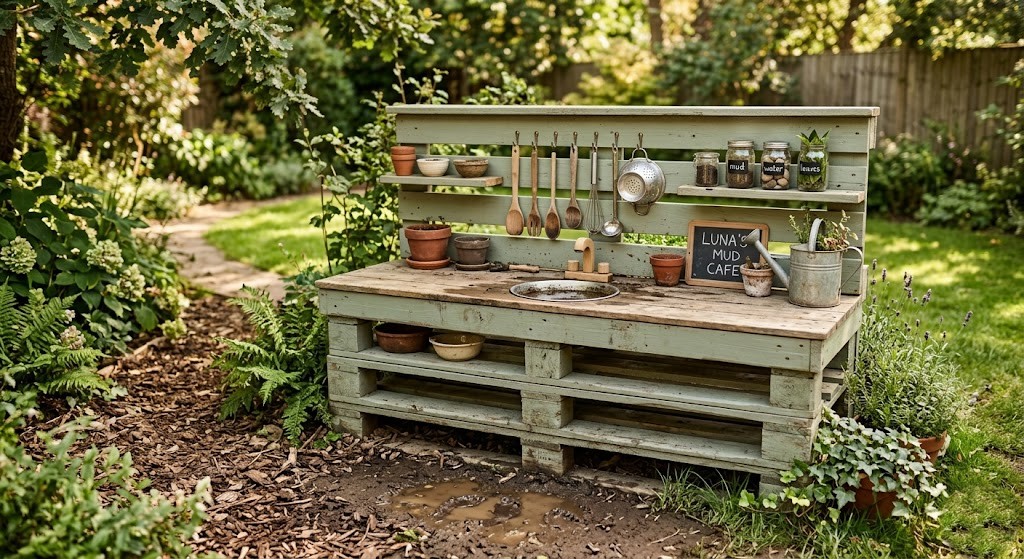
Stack three wooden pallets upright and secure them together to create an instant kitchen frame. Sand the edges, paint it in a soft colour like sage green, then add hooks and simple shelves. It is one of the cheapest builds and often costs nothing more than paint and screws.
2. The Belfast Sink Station
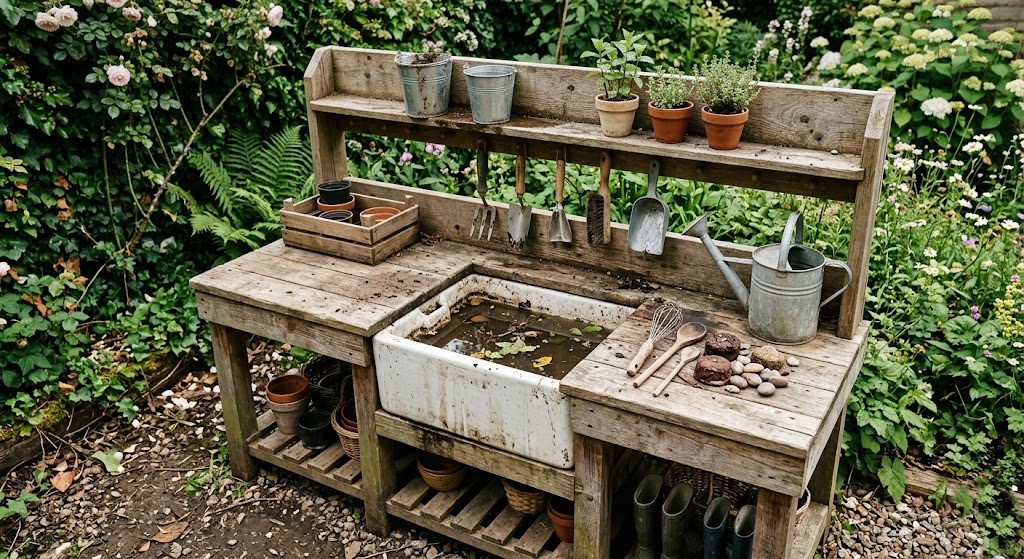
An old Belfast sink set into a sturdy timber frame creates a classic, high-end mud kitchen look. These sinks are often found for free or cheap on Facebook Marketplace or salvage yards during home renovations.
3. The Chalkboard Menu Board
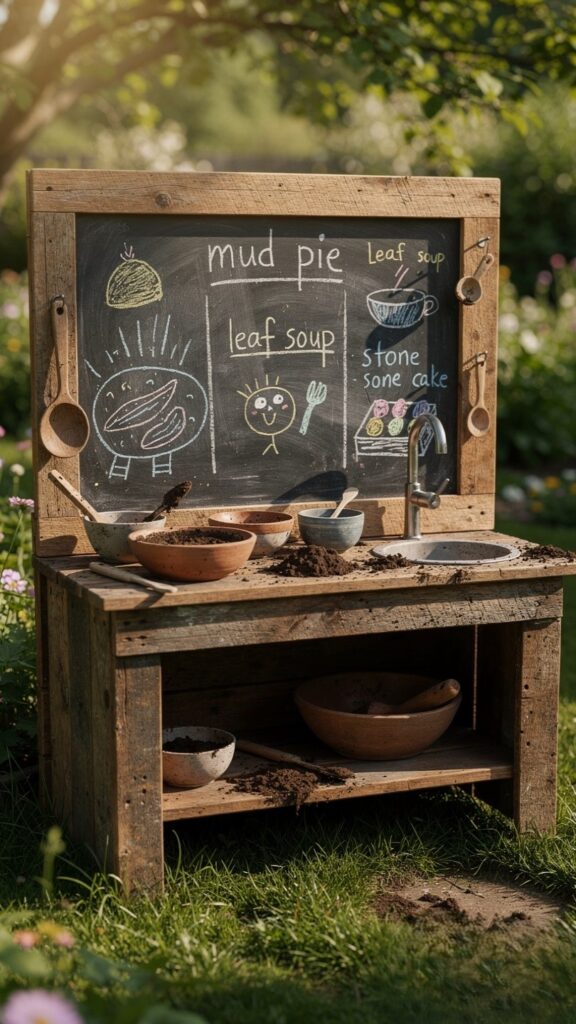
Attach a chalkboard-painted MDF panel to the back of the kitchen. Children can write menus, daily specials, or pretend recipes. It changes daily and keeps play constantly fresh.
4. The Repurposed Dresser Kitchen
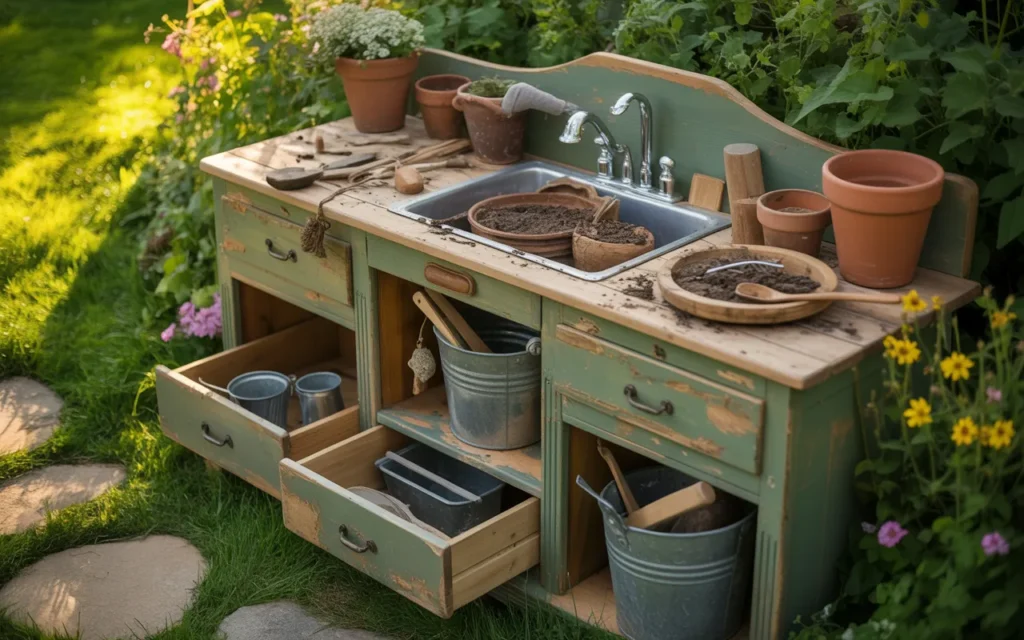
An old dresser or chest of drawers becomes a beautiful mud kitchen base. Remove some drawers for open storage, keep the top as a workspace, and use the lower sections for buckets, tools, and materials.
5. The Mud Kitchen Café
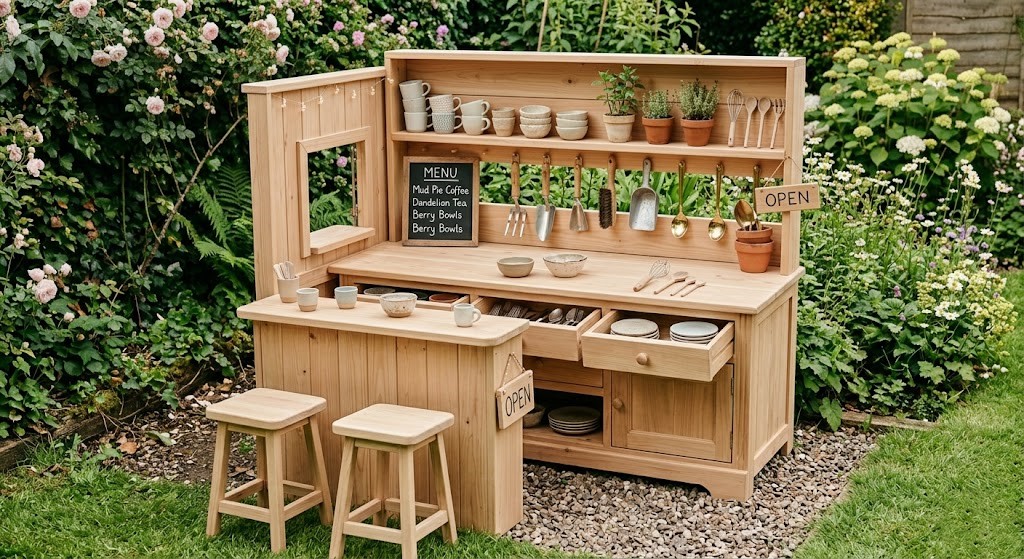
Add a simple serving hatch or fold-out counter to turn the kitchen into a café. Children can “serve” food through the window to parents, siblings, or toys, making role-play more interactive.
6. The Herb Garden Kitchen
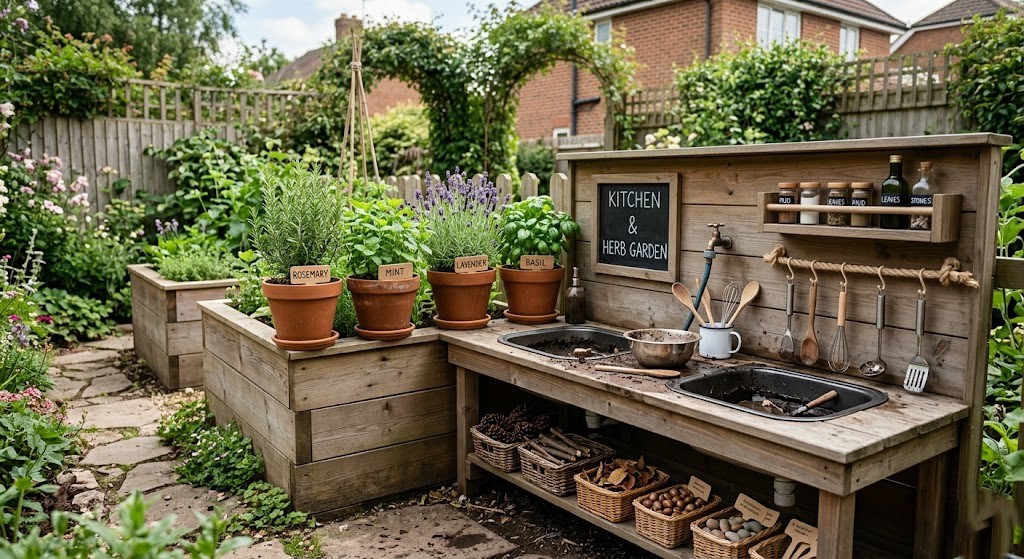
Place herb planters or raised beds beside the kitchen. Mint, rosemary, lavender, and basil add natural scent and allow children to mix real plants into their mud creations.
7. The Water Wall Add-On
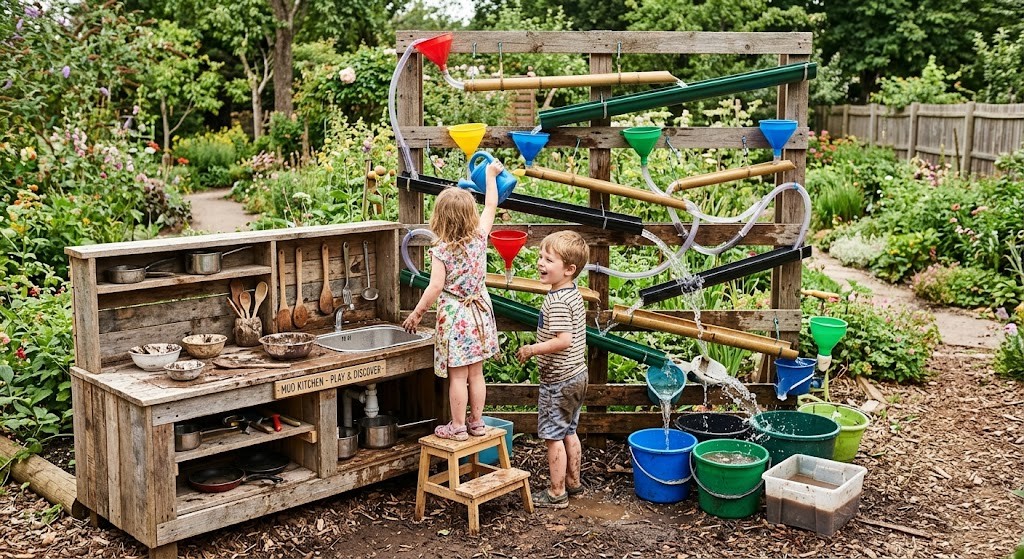
Fix pipes, funnels, and gutters onto a vertical board so water flows from top to bottom. Children pour water at the top and watch it travel through different paths. It is simple but endlessly entertaining.
8. The Fairy Light Kitchen
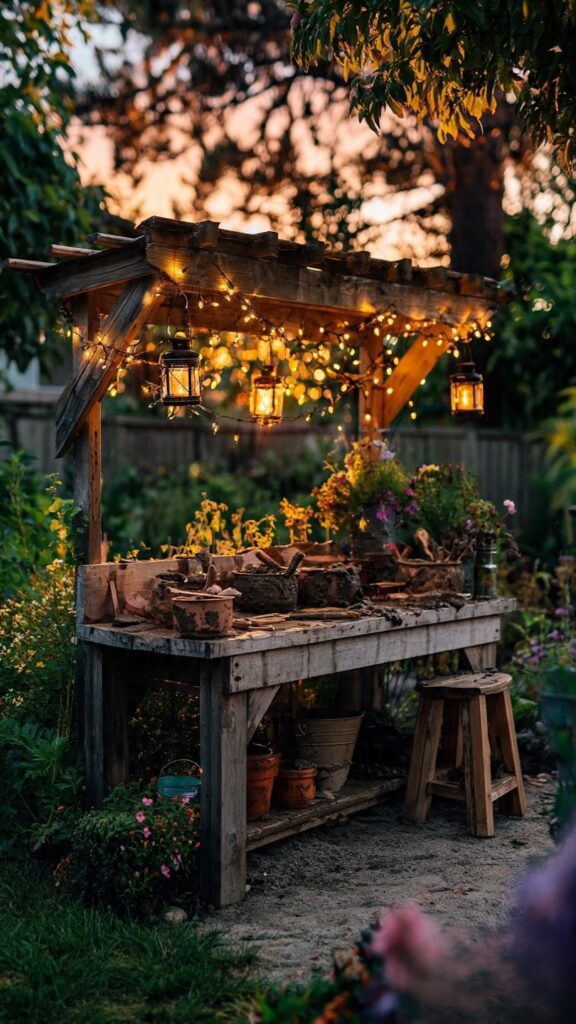
Wrap solar fairy lights around the frame or canopy. In the evening, the kitchen glows softly and becomes a magical outdoor play space that children naturally gravitate toward. I loved these fairy lights from amazon.
9. The Potting Shed Aesthetic
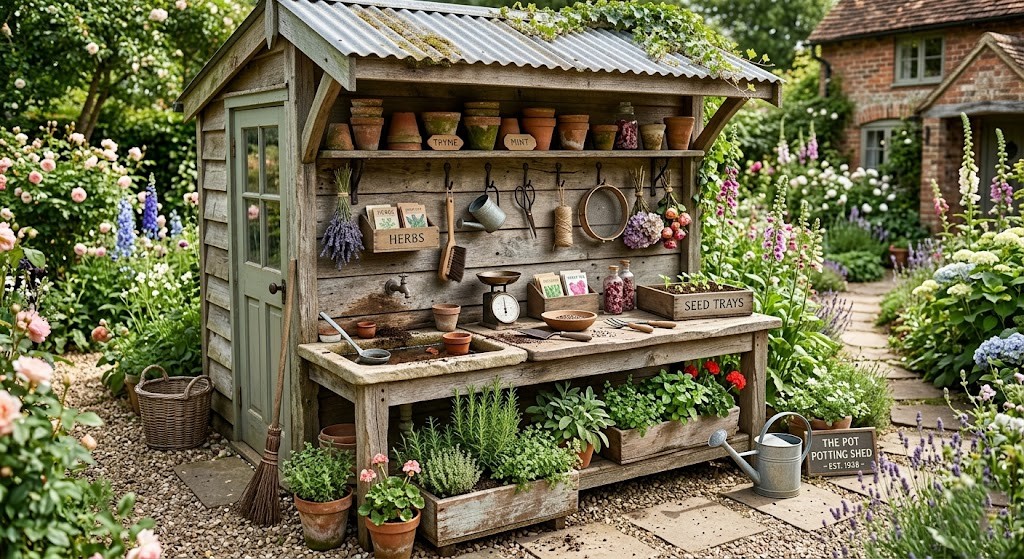
Use terracotta pots, seed trays, dried flowers, and vintage gardening tools. This creates a nostalgic garden shed feel that looks beautiful even when not in use.
10. The Teeny Tiny Toddler Kitchen
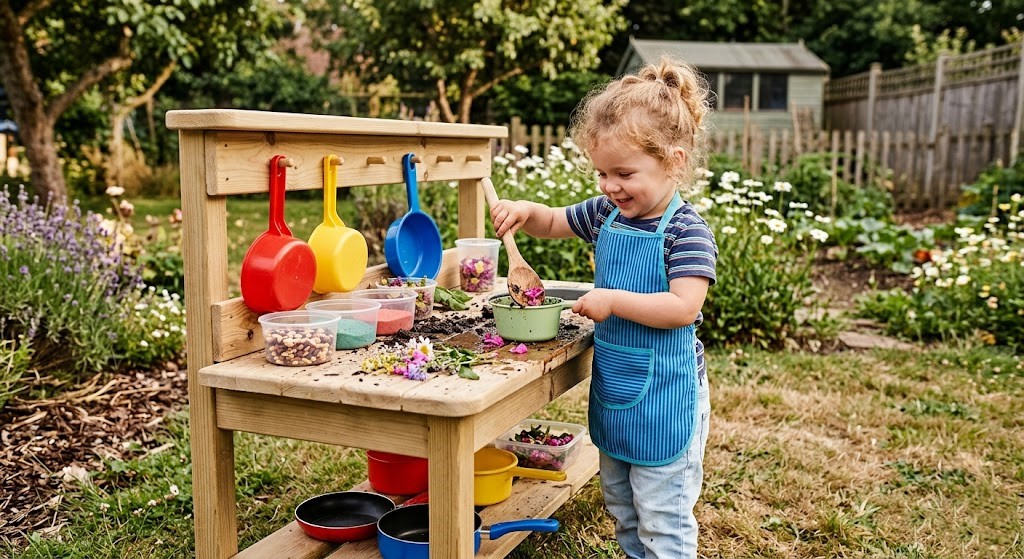
Lower the surface height for toddlers and use lightweight tools and shallow containers. The focus is on safe, independent sensory play rather than complex features.
11. The IKEA Hack Kitchen
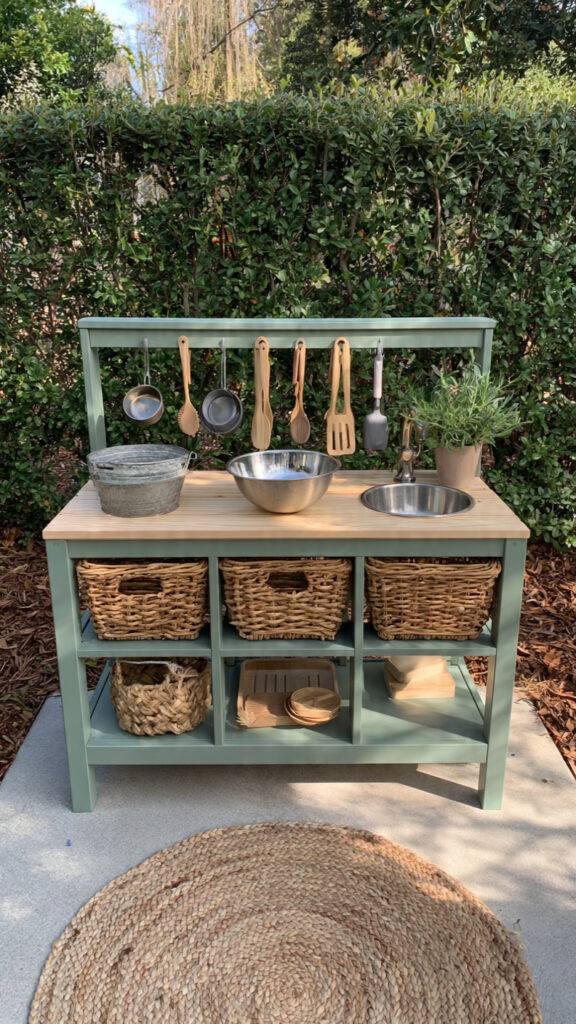
Convert IKEA shelving or storage units into a mud kitchen. Add paint, hooks, bowls, and baskets to turn simple furniture into a functional outdoor play station.
12. The Tuff Tray Starter Kitchen
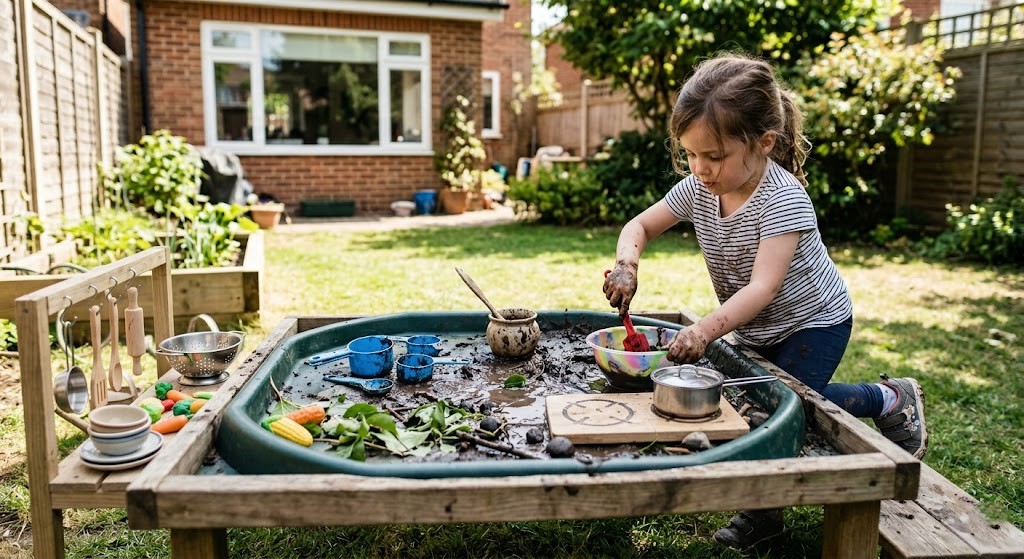
Place a large tuff tray like this one filled with mud, water, and tools on a low table. This is the easiest entry-level version of a mud kitchen and perfect for small spaces or beginners.
13. The Ingredient Shelf
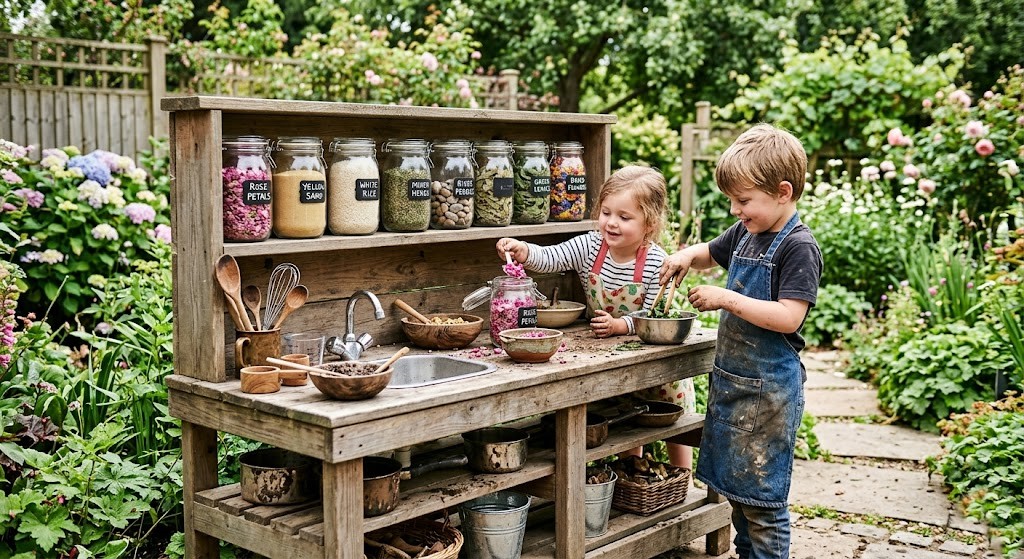
Install a spice rack or shelf filled with jars of natural materials like petals, rice, sand, herbs, and pebbles. Children enjoy selecting “ingredients” for their pretend recipes.
14. The Corner Kitchen
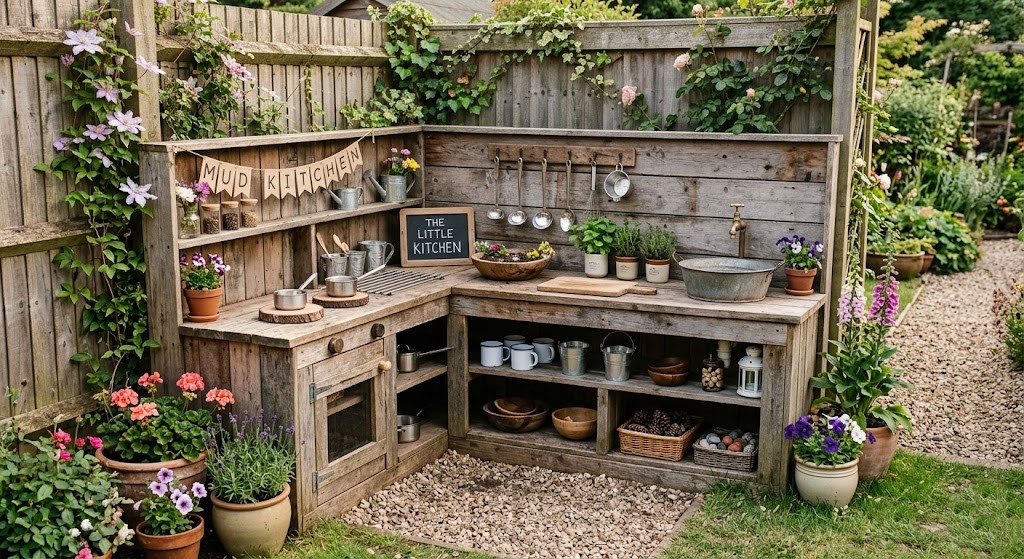
Build the setup into a fence corner so the walls already exist. An L-shaped counter gives more working space while using very little garden area.
15. The Natural Materials Kitchen
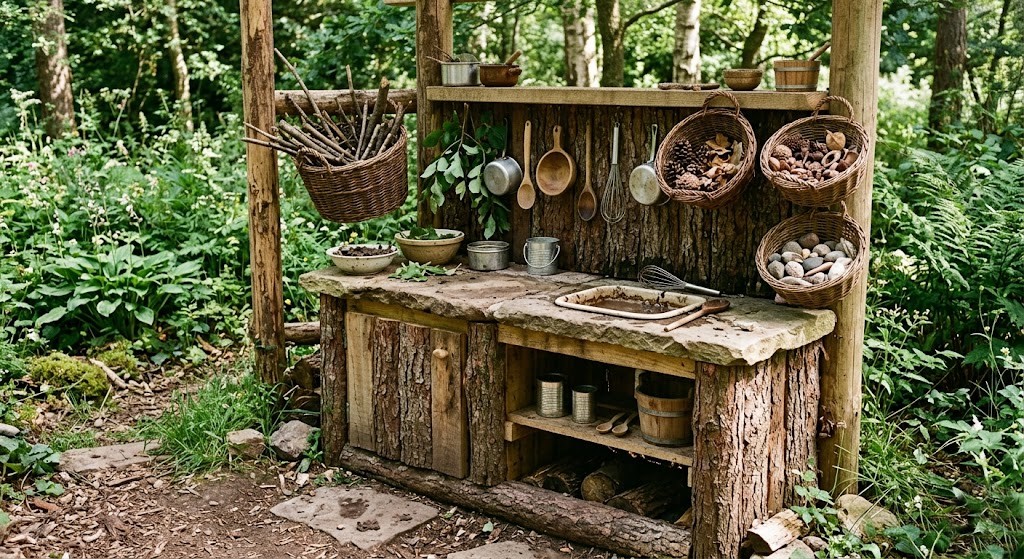
Use only natural elements like bark, stones, sticks, shells, and leaves. This creates a fully organic play experience that blends into the outdoor environment.
16. The Double-Sided Kitchen
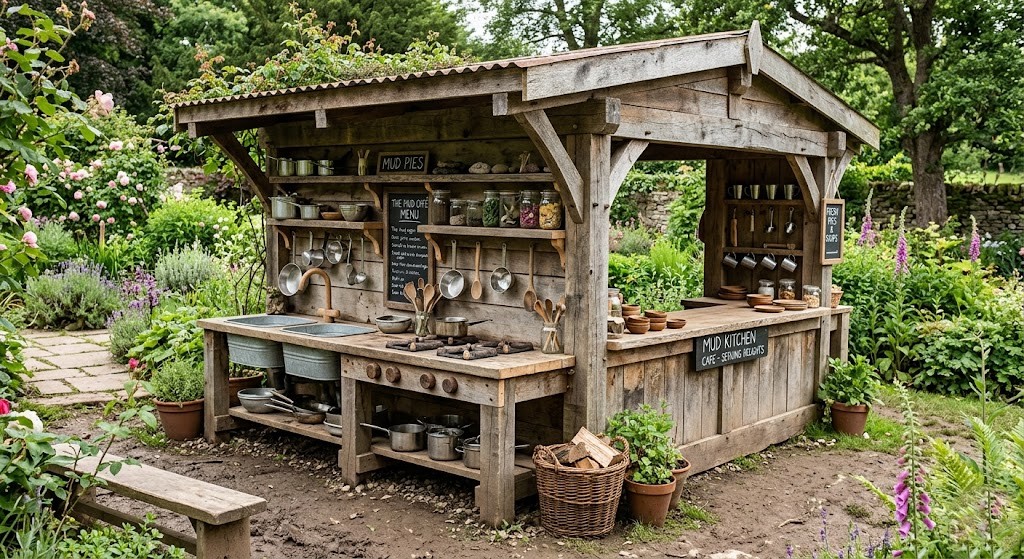
Design the kitchen so children can play from both sides. One side becomes the cooking area while the other works as a serving counter, perfect for group play.
17. The Painted Mural Frame
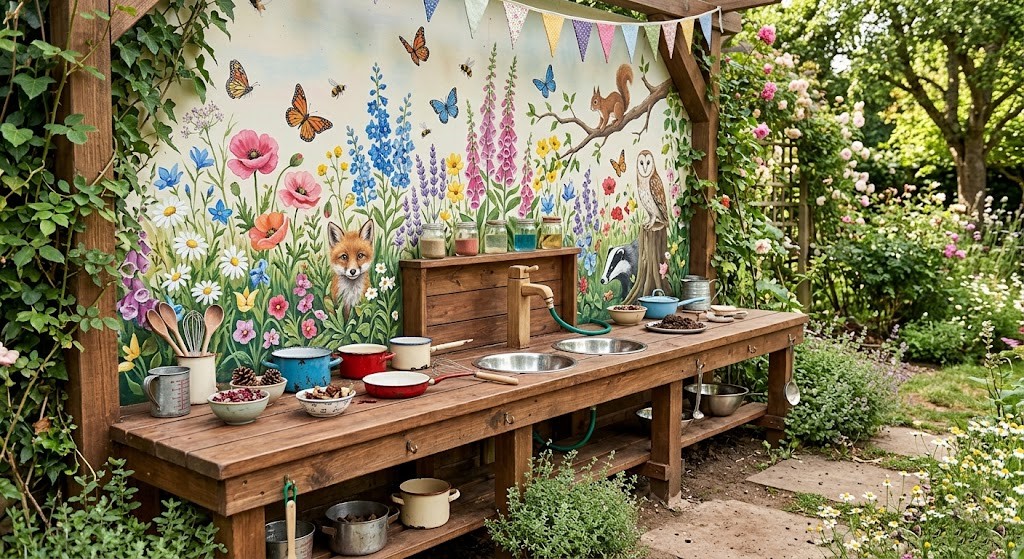
Add a painted backdrop with flowers, vines, and woodland designs. Even when not in use, it becomes a decorative garden feature.
18. The Pump & Tap Add-On
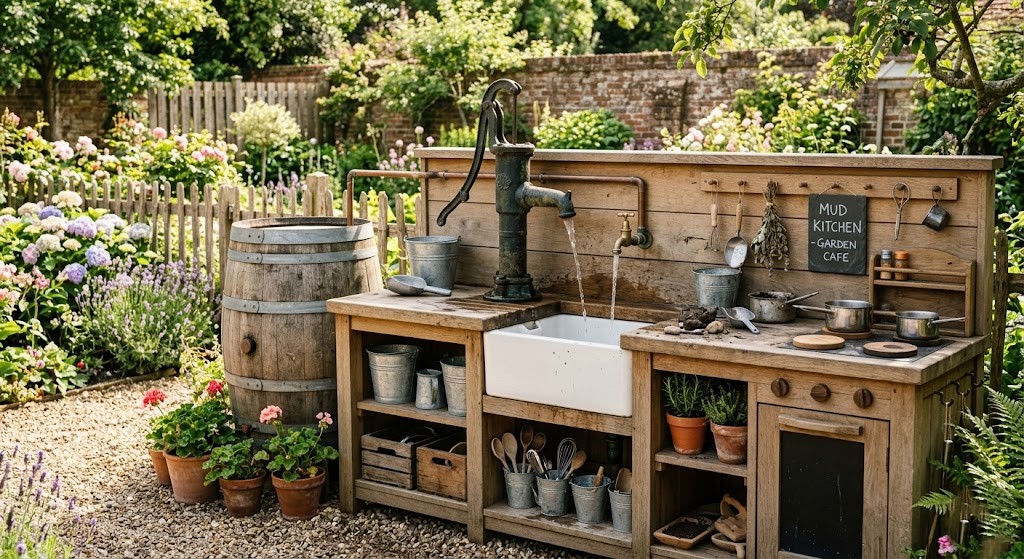
Install a hand pump or outdoor tap connected to a water barrel. Children can pump and pour water themselves, making play more interactive and realistic.
19. The Mud Kitchen Playhouse Combo
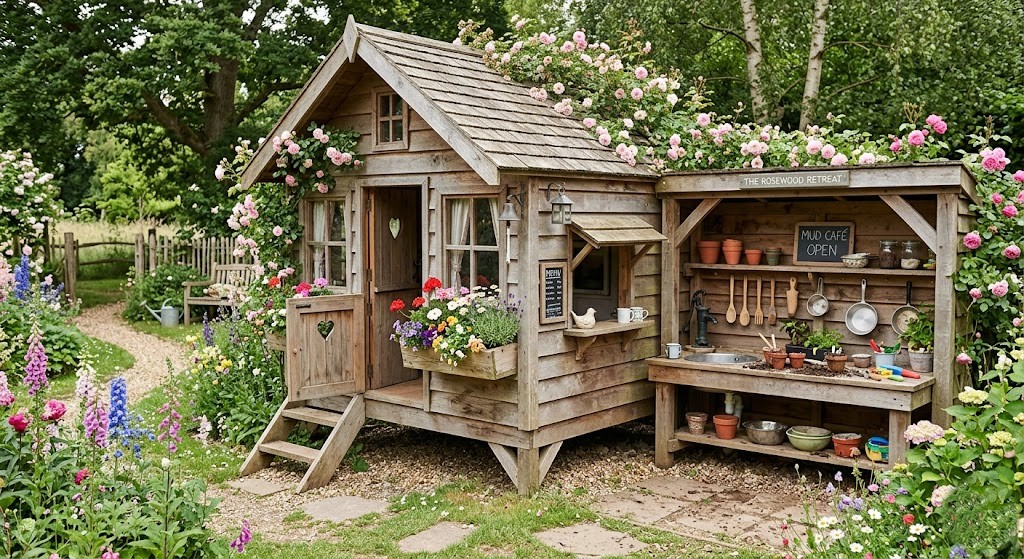
Attach the kitchen to a playhouse so both structures connect. A small serving window between them creates a full pretend-world setup.
20. The Autumn Sensory Kitchen
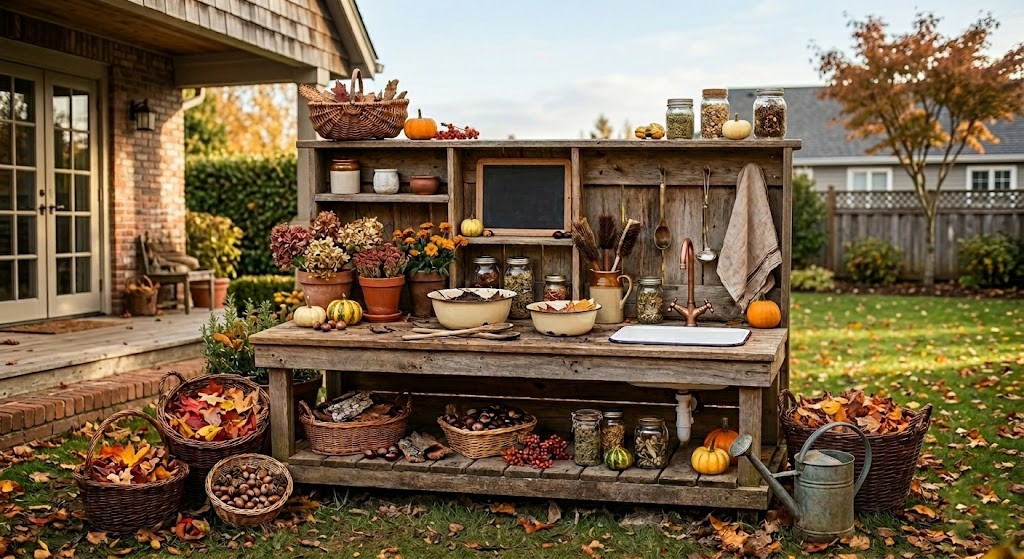
Change materials seasonally. In autumn, use leaves, acorns, bark, and conkers. This keeps the kitchen feeling new and exciting throughout the year.
21. The Potions Kitchen
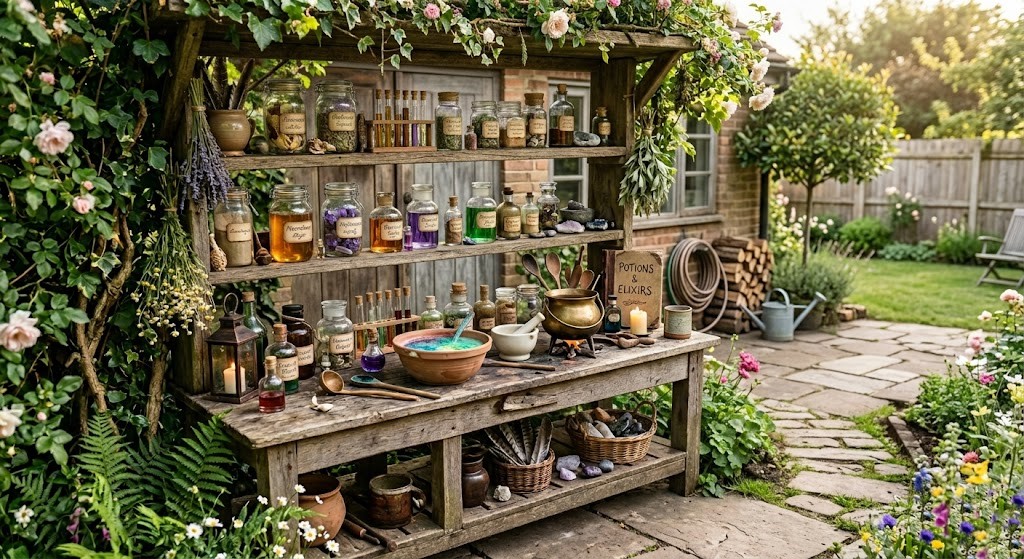
Turn the setup into a magical science lab with test tubes, mixing jars, and “experiment” cards. Children can create pretend potions and mixtures.
22. The Rooftop Mud Kitchen
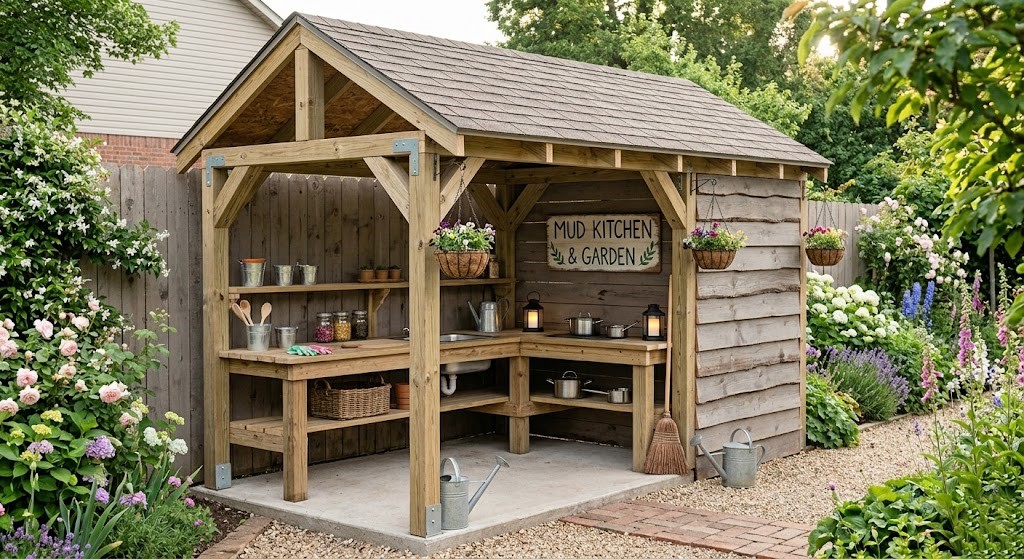
Add a simple roof or canopy to protect the kitchen from rain. This also allows outdoor play in more weather conditions and makes the structure feel complete.
23. The Ice Kitchen
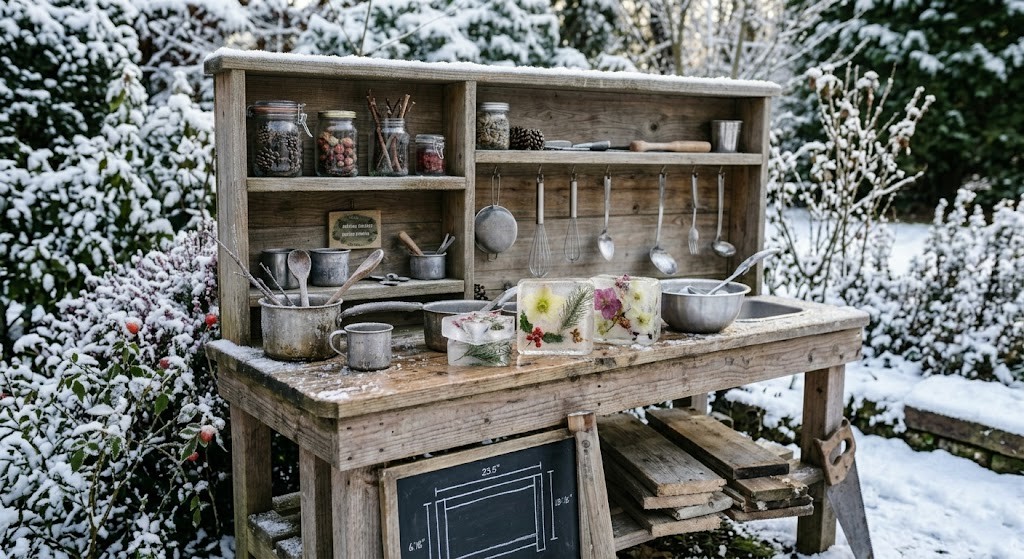
Use frozen flowers, ice cubes, and cold materials during summer or winter. Children explore texture, melting, and temperature differences through play.
24. The Colour-Pop Kitchen
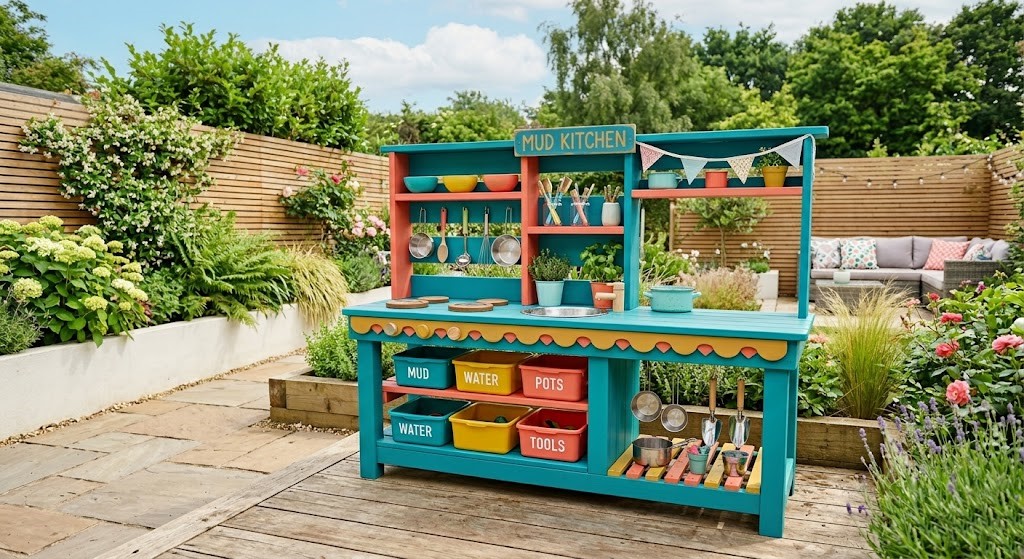
Paint the entire structure in a bold or soft statement colour like terracotta, teal, or dusty pink. A single colour choice can completely transform the look.
25. The Family Build Kitchen
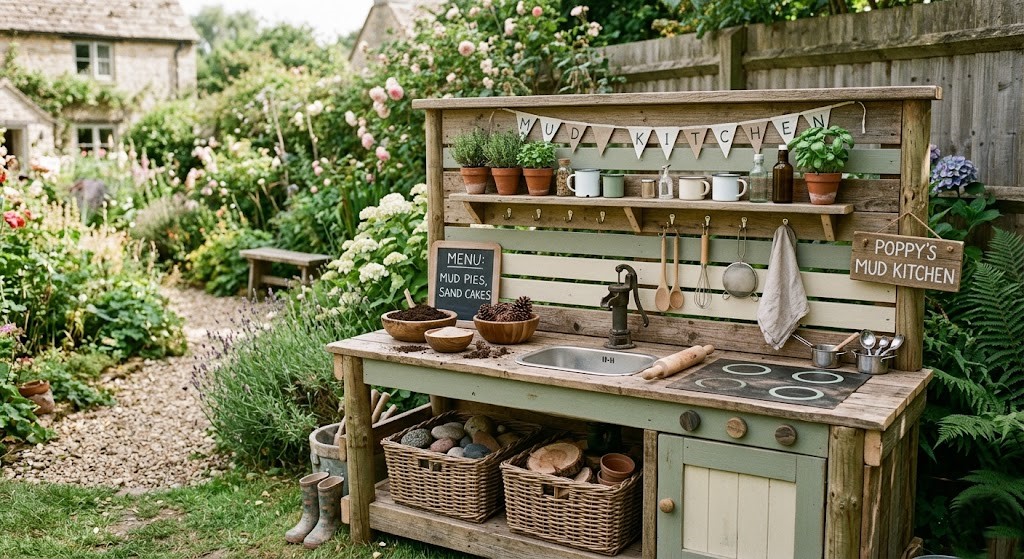
Involve children in building and decorating the kitchen. Painting, choosing colours, and helping assemble it creates emotional connection and increases long-term use.
What Does a Mud Kitchen Actually Need? (Less Than You Think)
Here’s the thing a lot of people don’t realise when they first start pinning mud kitchen ideas: the most beautiful ones? Often the simplest. A mud kitchen at its heart is just a surface, a few containers, and access to water and dirt. That’s genuinely it.
But of course, there’s a whole glorious rabbit hole of extras to fall down. Here’s a simple breakdown of essentials versus nice-to-haves:
🌟 The Non-Negotiables
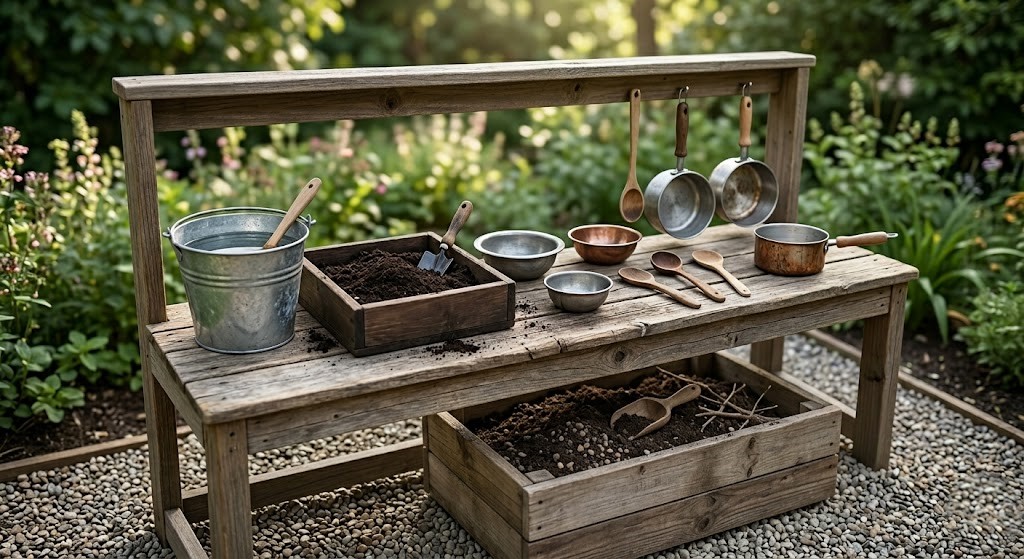
- ✓A work surface — even a plank of wood on two sturdy crates works perfectly
- ✓Water access — a bucket you refill works just as well as a plumbed-in tap
- ✓Mud or soil — a dedicated digging patch, or a bin filled with garden soil
- ✓A few pots and utensils — old wooden spoons, saucepans, bowls, ice cube trays
- ✓Something to contain the mess — a gravel or bark chip base saves your lawn
Now for the Fun Extras ✨
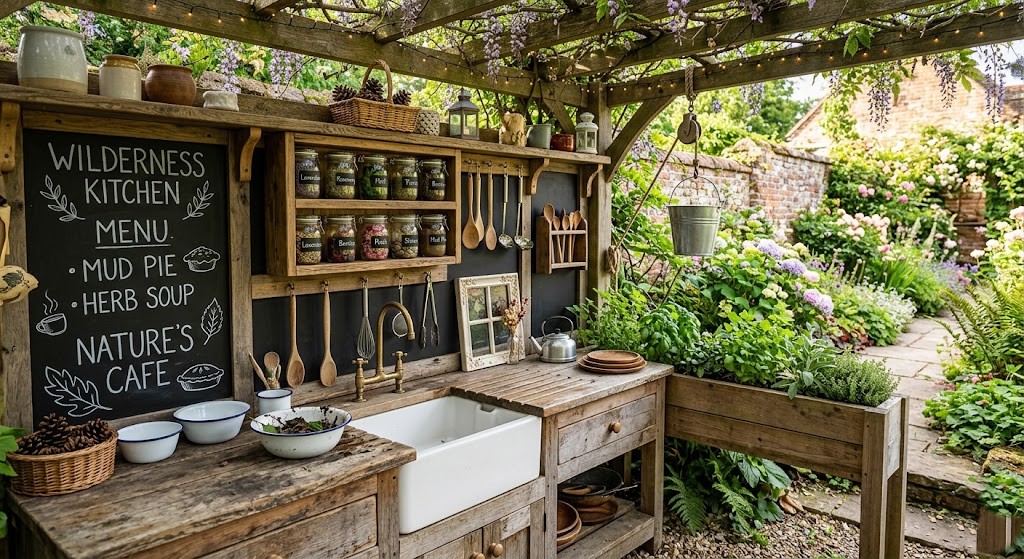
Once you’ve got the basics sorted, this is where it gets genuinely exciting. These additions transform a simple mud kitchen into a full sensory adventure:
- ✓A real sink (car boot sales are your best friend here — old Belfast sinks are dreamy)
- ✓An old spice rack mounted to the back panel for “ingredients”
- ✓A chalkboard panel for writing today’s specials
- ✓A little awning or pergola overhead for shade
- ✓Hooks for hanging utensils, sieves, and measuring jugs
- ✓A pulley system to lift water buckets (kids are OBSESSED with this)
- ✓A small herb garden planted right beside it — rosemary, mint, lavender
- ✓A “window” frame cut into the back panel for extra charm
- ✓Fairy lights strung along the top for magic hour vibes
- ✓A tiny rooftop if you want to go all out (it keeps things drier in autumn and spring)
- a set of stainless steel mixing bowls
How to Keep the Mud Kitchen Exciting All Year Long
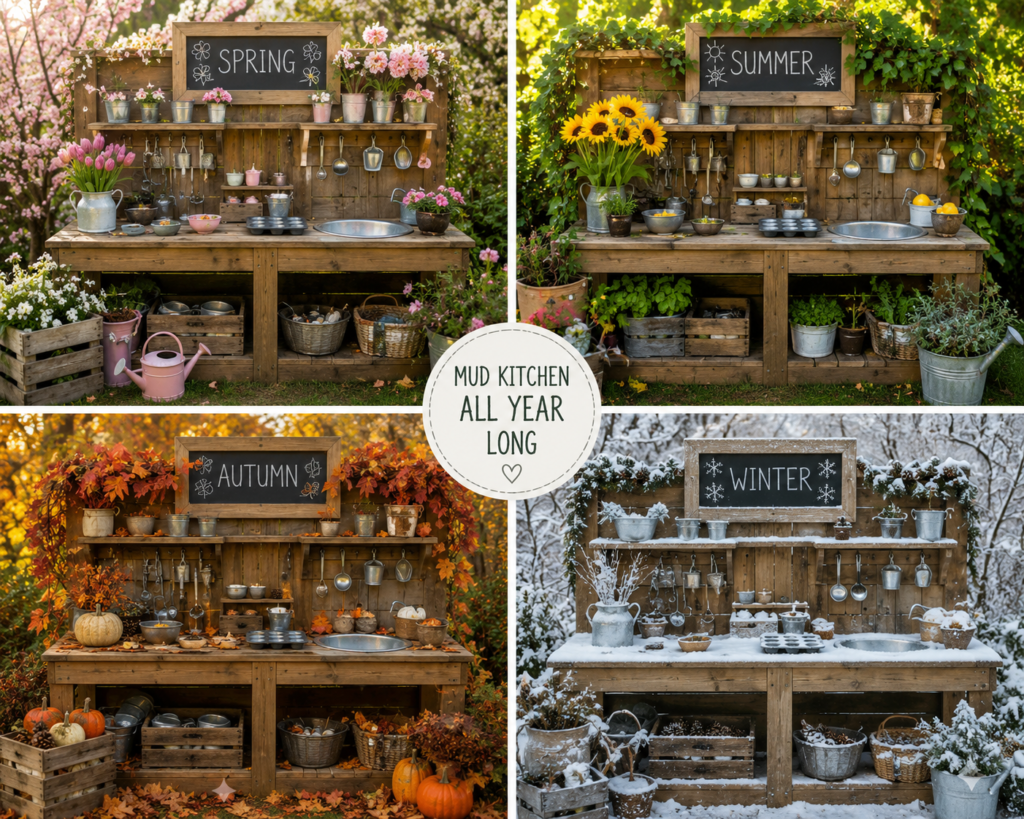
One of the best things about a mud kitchen is that it works beautifully in every season.
🌸 Spring
- Fresh blossom and petals
- Seed planting
- Worm spotting
- Dandelion “ingredients”
- Peak mud season
☀️ Summer
- Frozen flower ice cubes
- Herb harvesting
- Water play
- Evening fairy lights
- Outdoor café sessions
🍂 Autumn
- Acorns and dried leaves
- Cinnamon potion play
- Bark textures
- Mud pies
- Berry “soups”
❄️ Winter
- Ice and frost ingredients
- Pine needle infusions
- Sensory cold-weather play
- Muddy boots everywhere
- Hot cocoa breaks afterward
Mud Kitchen Ideas for Every Single Budget
You really do not need a big budget to create a mud kitchen that children will love. In fact, some of the simplest and cheapest setups often end up being the most used and the most loved.
What matters most is not how much you spend, but how accessible, fun, and easy the space is for children to use.
Free to Almost Free Ideas
At this level, you can build a surprisingly effective mud kitchen using things you already have at home or can find for free.
Typical ideas include:
- Pallet kitchens made from scrap wood
- Old furniture repurposed into work surfaces
- Tuff tray setups filled with soil and water
- DIY stations using crates, planks, and buckets
These setups rely heavily on creativity rather than money.
Sources where you can usually find materials: Freecycle, Facebook Marketplace, recycling piles, and even leftover garden or shed materials.
£20–£60 Budget Ideas
With a small budget, you can significantly improve the look and durability of your mud kitchen.
Common builds include:
- Painted pallet structures
- Basic shelving with hooks
- Second-hand sinks or basins
- Bark chip or gravel flooring for mess control
This range is ideal for adding a bit of structure while still keeping things very affordable.
Sources for materials: Charity shops, car boot sales, salvage yards, and discount DIY stores.
£60–£150 Budget Ideas
This is the “proper build” range where the mud kitchen starts to feel more permanent and structured.
You can add:
- Timber-framed kitchen units
- Chalkboard panels for menus and play
- Small roof or canopy additions
- Water taps, pumps, or refill stations
- Better storage and shelving systems
At this stage, the kitchen becomes more durable and weather-resistant, which means longer-term outdoor use.
£150–£400 Budget Ideas
This level allows for more creative and visually impressive builds that feel like full outdoor play stations.
Typical upgrades include:
- Custom-built wooden kitchens
- Belfast sinks for water play
- Herb garden integration around the setup
- Water walls with funnels and pipes
- More detailed design and finishing work
These setups often look like Pinterest feature projects and can become a major garden focal point.
£400+ Premium Builds
At the higher end of the budget, mud kitchens become full outdoor play structures.
This can include:
- Playhouse and mud kitchen combinations
- Bespoke carpentry and design work
- Professionally installed garden play areas
- Fully themed outdoor learning spaces
These are often designed as long-term garden installations rather than simple DIY projects.
Final Thoughts
The honest truth is simple:
Children do not care how much you spent.
They do not care if it is made from pallets or professionally built.
If the mud kitchen is easy to reach, fun to use, and full of things to explore, it will become part of their daily play.
And that is what really matters.